
The new forest
Local people do the planting. They clear the weeds, fertilise the soil and bring back the local species the forest had lost.
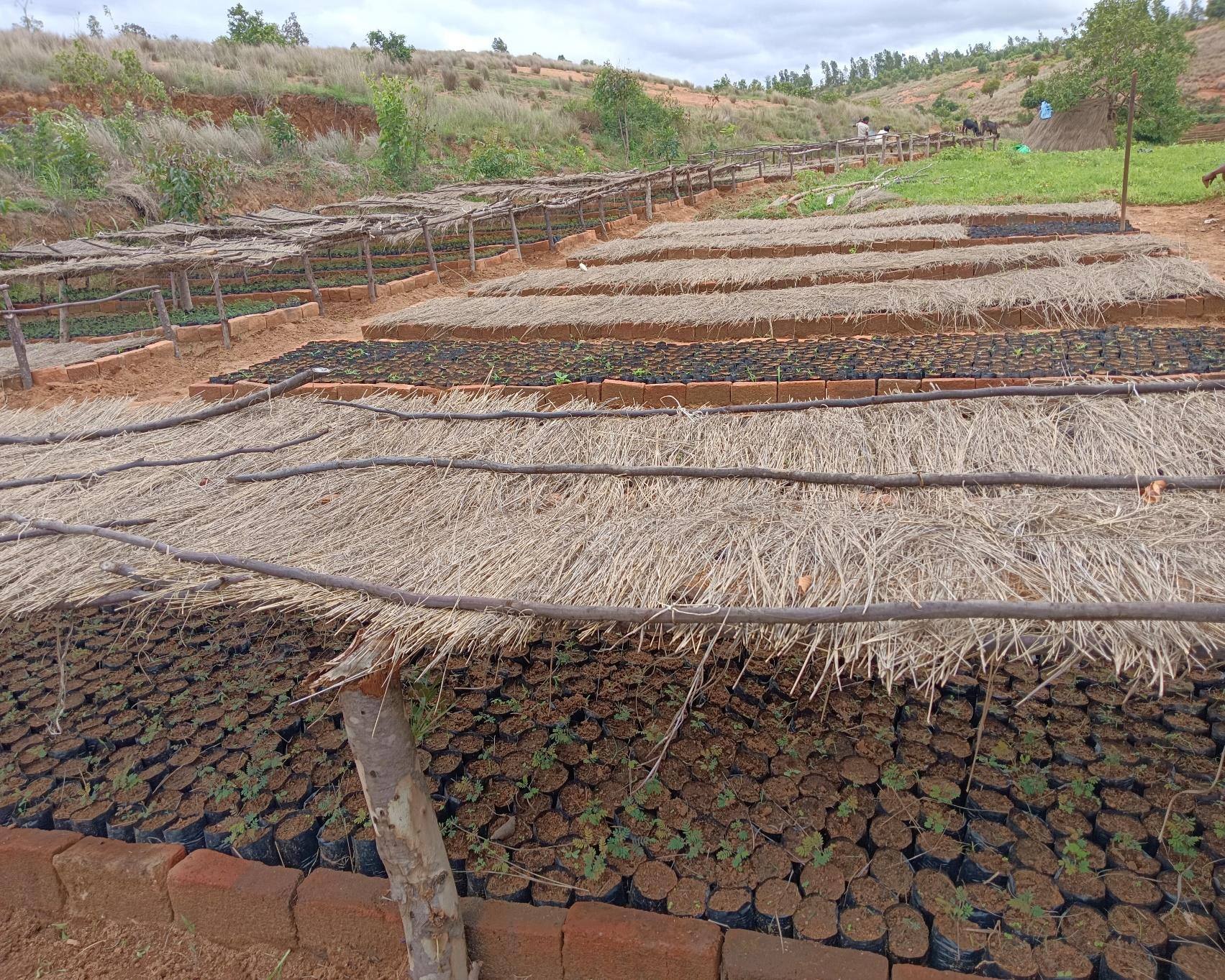
- Specimen
- Setting up the nursery in the rural commune of Manamisoa
- Loc.
- Commune rurale de Manamisoa
- Date
- 2025
- Note
- Source: Report Jul–Dec 2025
The advance of the new forest
Reforestation relies on local residents: clearing weeds, fertilising the soil, planting the local species being reintroduced.
The project supervisor sends Favini detailed reports on seeding and planting, the creation of community plots and ecotourism, together with a financial account.
With Voiala, Sahavondronina and other communities have taken back control of their land.
How a plot is planted
- Clear the weeds.
- Fertilise the soil.
- Plant the local species being reintroduced.
75ha
No. 150,000trees
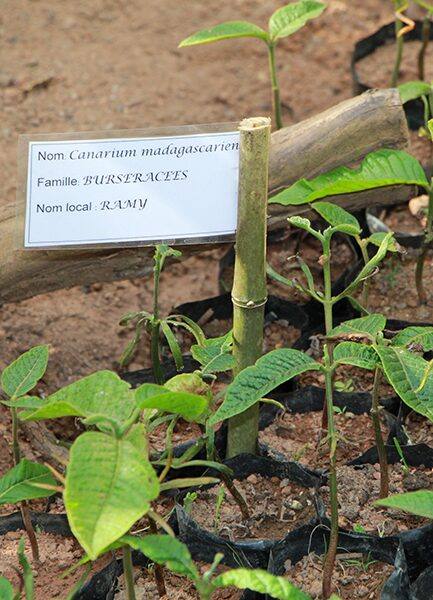
- Specimen
- Ramy seedlings (Canarium madagascariense), a native tree species, in the nursery
- Note
- 75 ha of forest restored thanks to the Voiala project ; 150,000 trees planted through the Voiala project. Source: Favini
The 2025 nurseries
This year, three geolocated community nurseries are preparing the next planting season, in close collaboration with ADES.
Residents, especially young people, were trained in participatory planning and nursery management. Local associations received the same training.
The nurseries supply young forest trees, bamboo and fruit trees for reforestation and for green spaces in the villages.
| Site | Number |
|---|---|
| Manamisoa | 32,500 |
| Sahavondronina | 19,439 |
| Ambatolahitelo | 2,400 |
| Total | 54,339 |
| Site | Number |
|---|---|
| Manamisoa | 20,750 |
| Androy | 22,471 |
| Total | 43,221 |
3nurseries
No. 54,339pots
No. 43,221young plants
- Specimen
- The 2025 nurseries
- Loc.
- Manamisoa · Sahavondronina · Ambatolahitelo
- Date
- 2025
- Note
- The type of bag depends on the species and the area. Source: Report Jul–Dec 2025
From seed to young plant
Preparing the seeds
Growing your own seedlings means more species to choose from, full control from seed to plant, and low cost. It takes suitable containers and, above all, good seed compost that holds the moisture and warmth each seed needs to germinate.
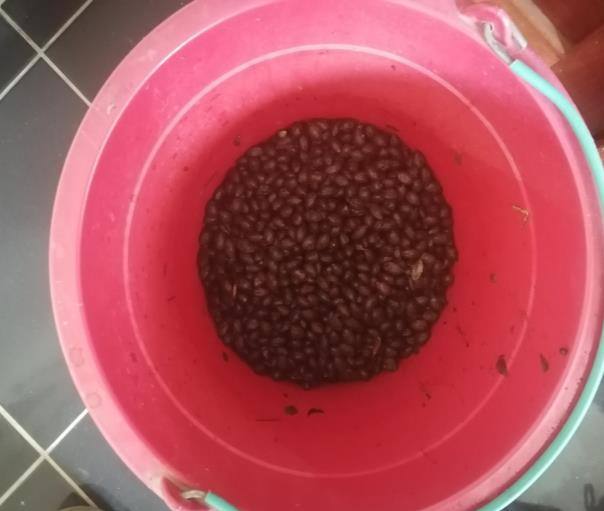
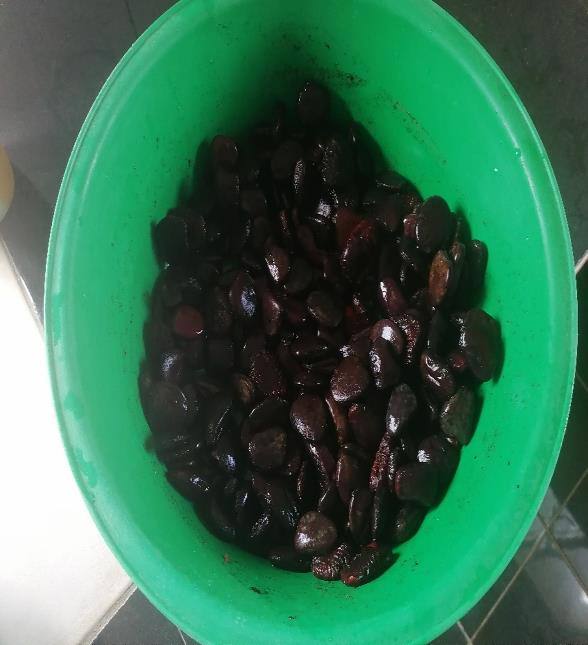
Depending on the species, seeds are soaked in hot or cold water, hulled or stratified, then broadcast on a seedbed or sown straight into pots.
- Specimen
- Seed treatment
- Date
- Oct–Dec 2025
- Note
- Source: Report Jul–Dec 2025
| Vernacular name | Scientific name | Status | Quantity (g) | Pre-treatment | Sowing method | Sowing date |
|---|---|---|---|---|---|---|
| Kininina | Eucalyptus robusta | Exotic | 1,000 | not given | Broadcast on seedbed | Oct 2025 |
| Akasia | Acacia mangium | Exotic | 1,000 | Soaked in hot water | Broadcast on seedbed | Oct 2025 |
| Tsetoy | Dodonaea madagascariensis | Native | 500 | not given | Broadcast on seedbed | Nov 2025 |
| Tapia | Uapaca bojeri | Native | 1,000 | Hulled | Sown directly in pots | Nov 2025 |
| Hintsy / Tsararavina | Intsia bijuga | Native | 1,000 | Soaked in cold water, 24 h | Sown on seedbed | Dec 2025 |
| Anakaraka | Cordyla madagascariensis | Native | 500 | Soaked in cold water, 24 h | Sown on seedbed | Dec 2025 |
| Mentaly | Terminalia mentaly | Native | 500 | Soaked in cold water, 72 h | Sown on seedbed | Dec 2025 |
| Harongana | Harungana madagascariensis | Native | 500 | Soaked in cold water, 24 h | Broadcast on seedbed | Dec 2025 |
| Manga | Mangifera indica | Exotic | not given | Cleaned, hulled | Sown directly in pots | Dec 2025 |
| Paiso | Prunus persica | Exotic | not given | Cleaned, stratified | Sown directly in pots | Dec 2025 |
Source: Report Jul–Dec 2025
Filling the pots
For the new campaign, 54,339 pots (planting bags) were filled with soil and closed at the three sites. The bag used varies with the species and the area.
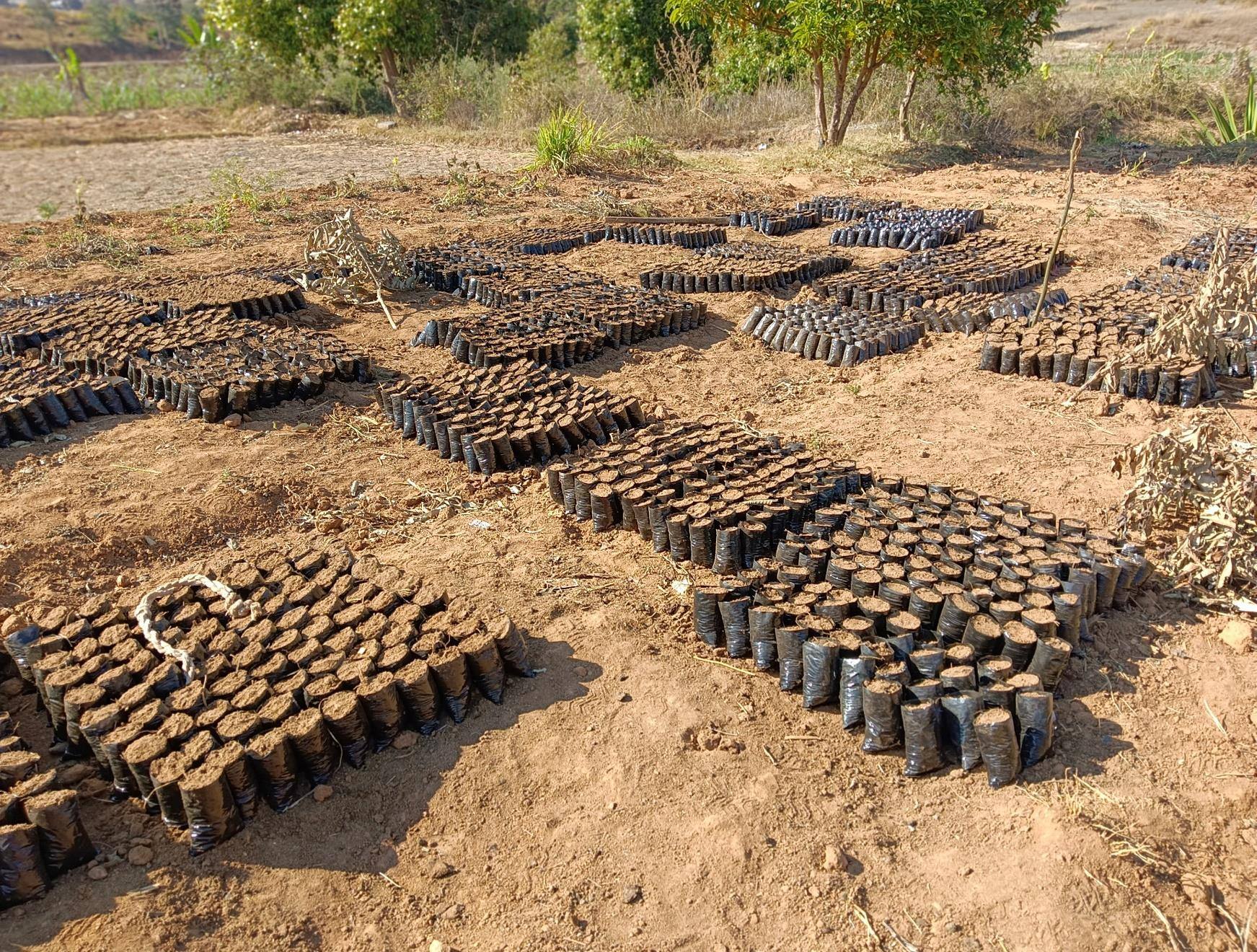
- Specimen
- Filling pots to prepare the young seedlings
- Date
- 2025
- Note
- Source: Report Jul–Dec 2025
Transplanting the young plants
From these seedlings, 43,221 young plants of native and exotic species were transplanted in the Voiala nurseries. Many are not ready yet: they need more time to grow.
Two ways to do it
- Collect young shoots that have already sprouted in the forest.
- Sow on a seedbed, then move each seedling into a soil-filled bag once it has about four leaves.
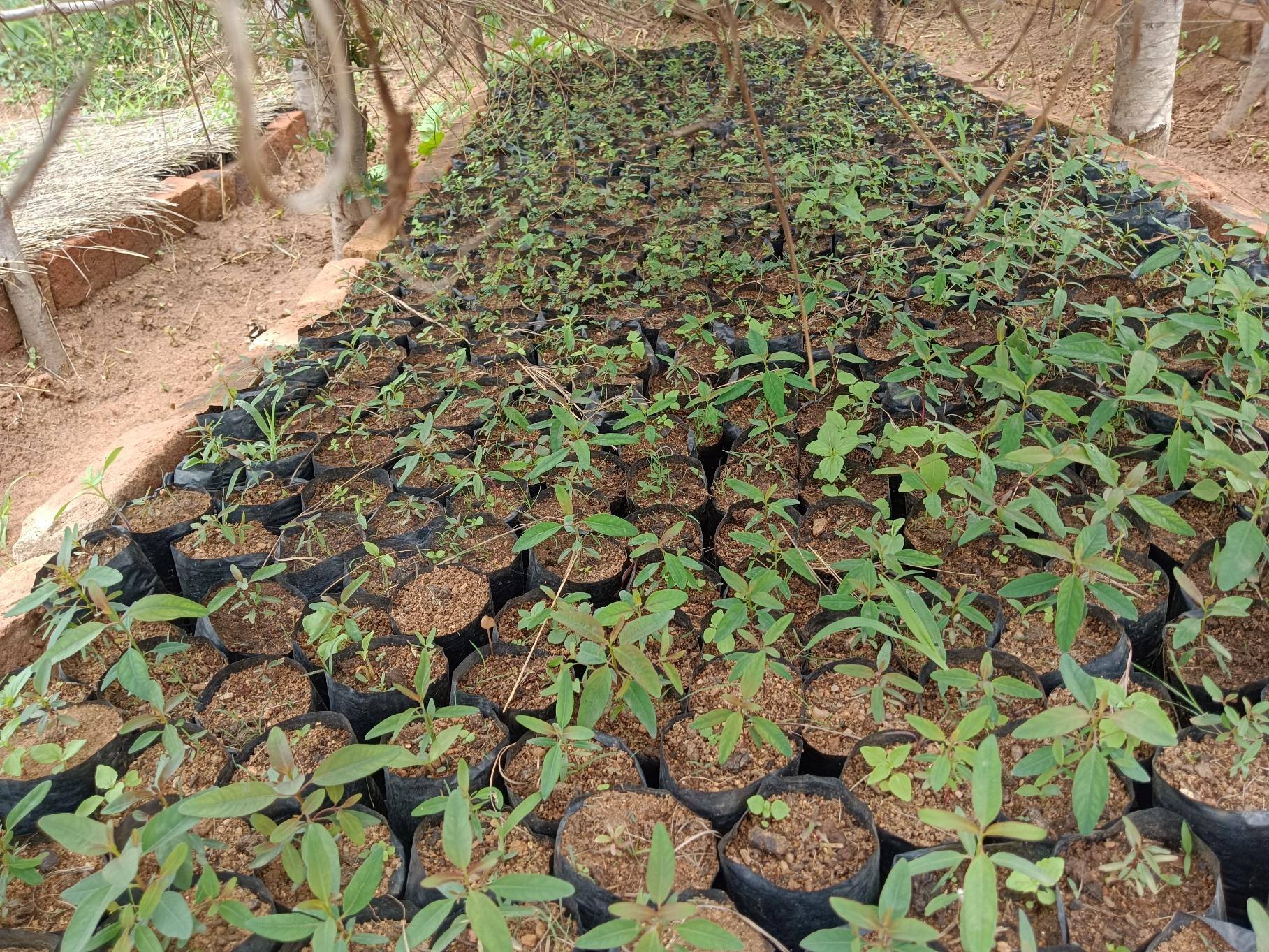
- Specimen
- Eucalyptus seedlings in the Manamisoa nursery, 2025-2026 season
- Loc.
- Pépinière de Manamisoa
- Note
- Source: Report Jul–Dec 2025
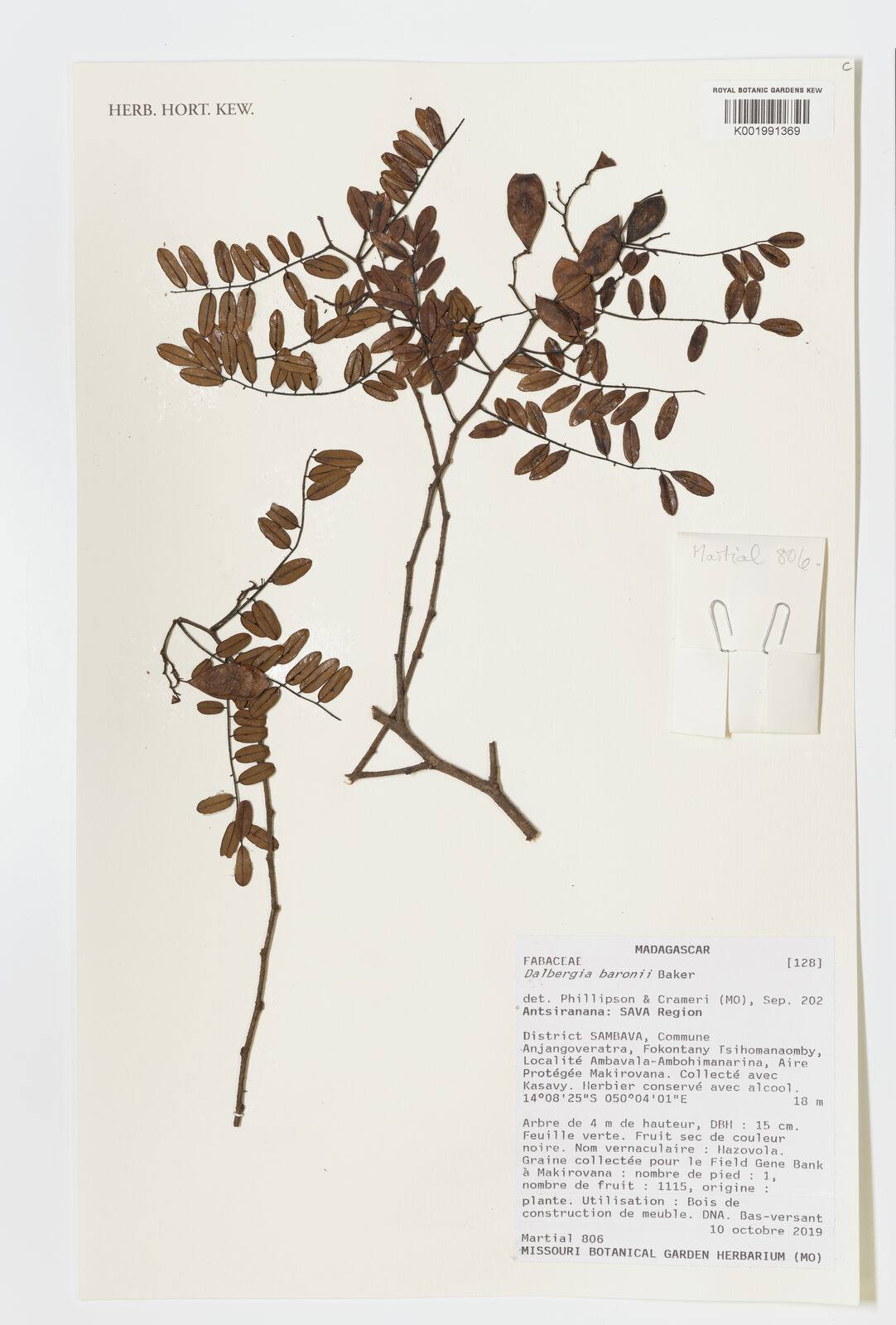
Dalbergia baroniiMiholy
Hard, heavy, dark brown wood that resists termites and fungi.
Use Furniture and woodturning.
276young plants in the nursery, 2025
- Scientific name
- Dalbergia baronii
- Fam.
- Fabaceae
- Loc.
- Sahavondronina
- Leg.
- communities of Sahavondronina
- Lic.
- CC BY 4.0
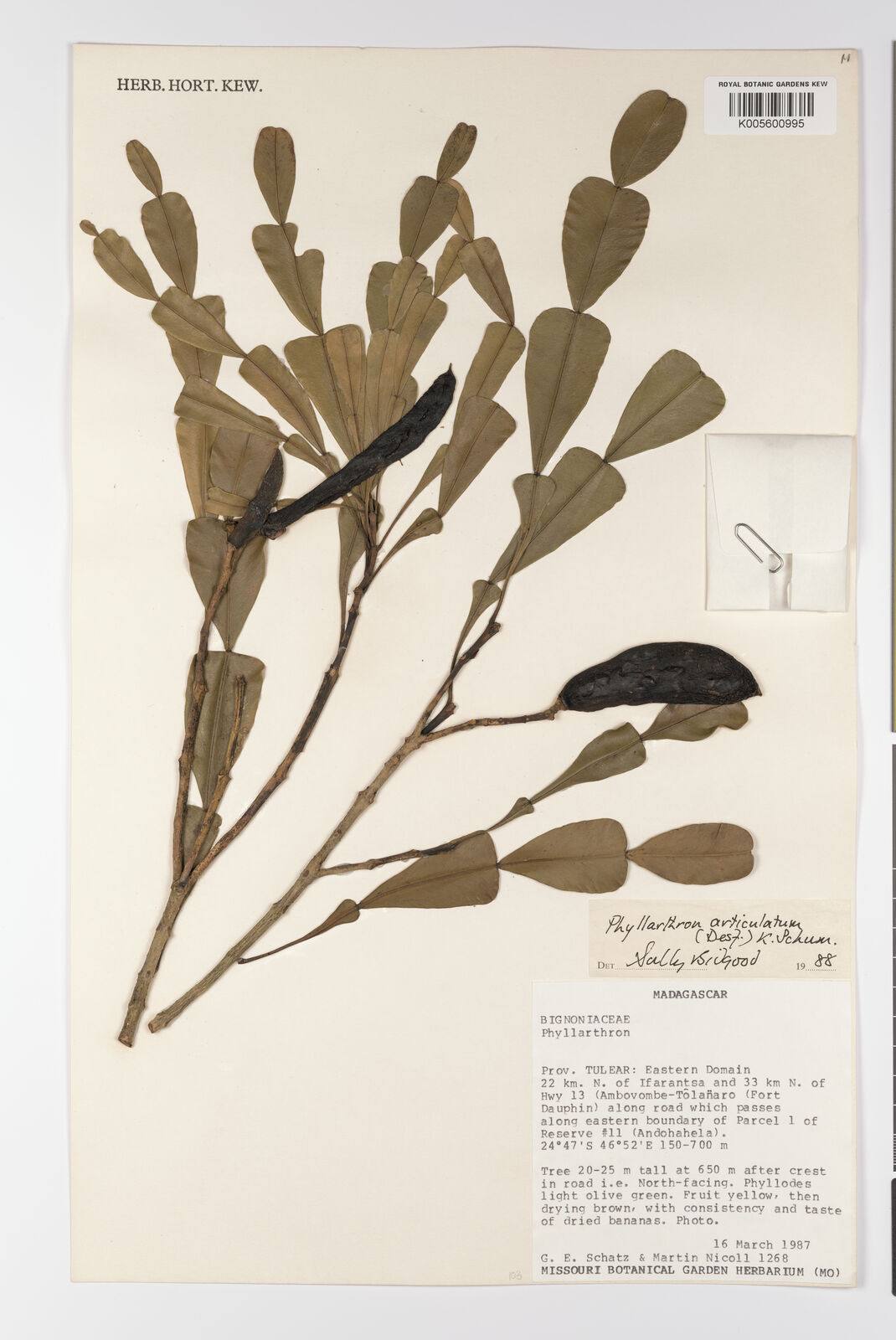
Phyllarthron articulatum
A tree of 20 to 25 metres with yellow fruit. Once dried, the fruit turns brown and has the texture and taste of dried banana.
- Scientific name
- Phyllarthron articulatum
- Fam.
- Bignoniaceae
- Loc.
- Sahavondronina
- Leg.
- communities of Sahavondronina
- Lic.
- CC BY 4.0
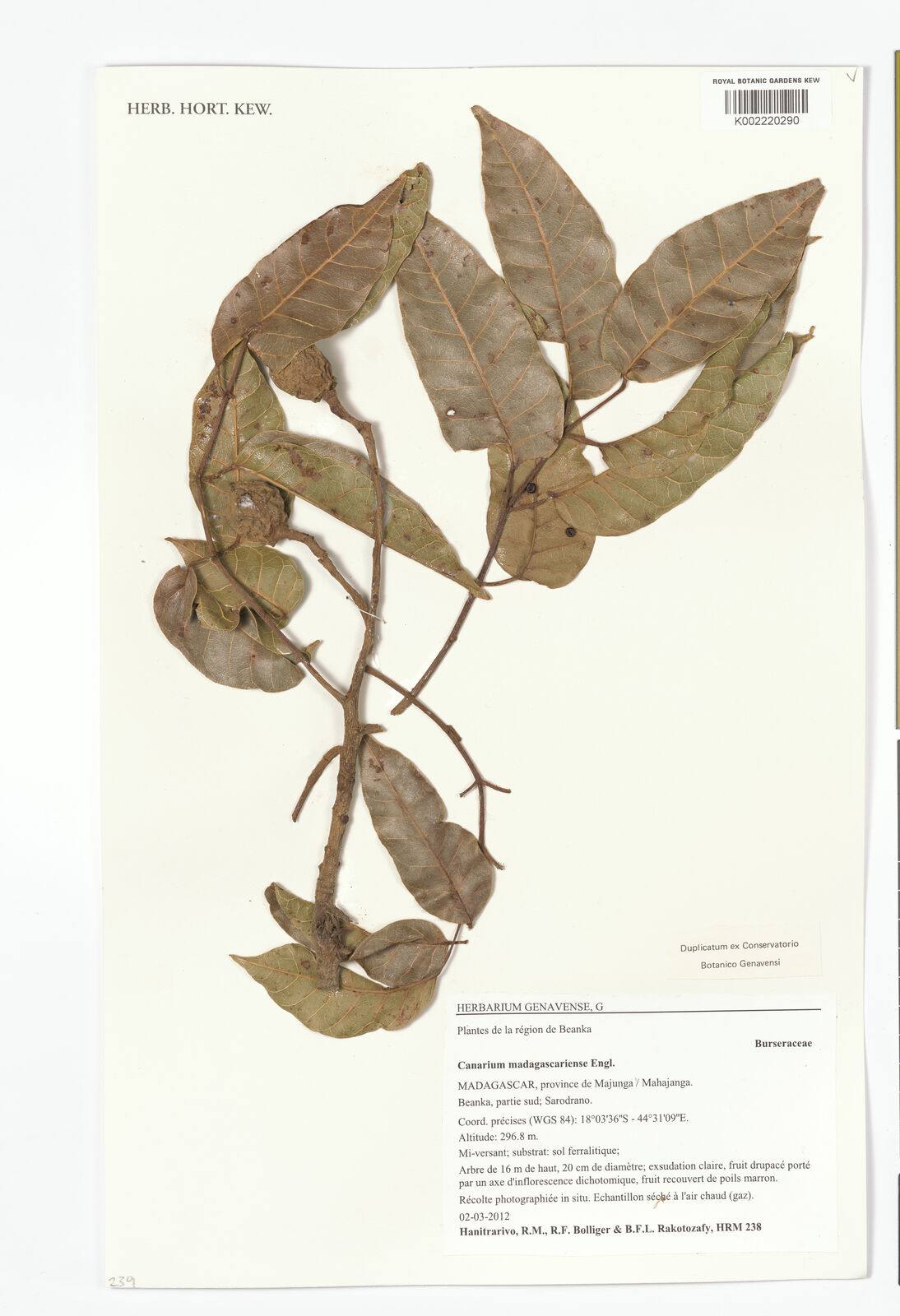
Canarium madagascariense
Can reach 40 to 50 metres. It plays an important part in enriching degraded soil.
Use Its wood is used to build pirogues (dugout canoes), its seeds are edible and the resin from its bark has a distinctive scent.
- Scientific name
- Canarium madagascariense
- Fam.
- Burseraceae
- Loc.
- Sahavondronina
- Leg.
- communities of Sahavondronina
- Lic.
- CC BY 4.0
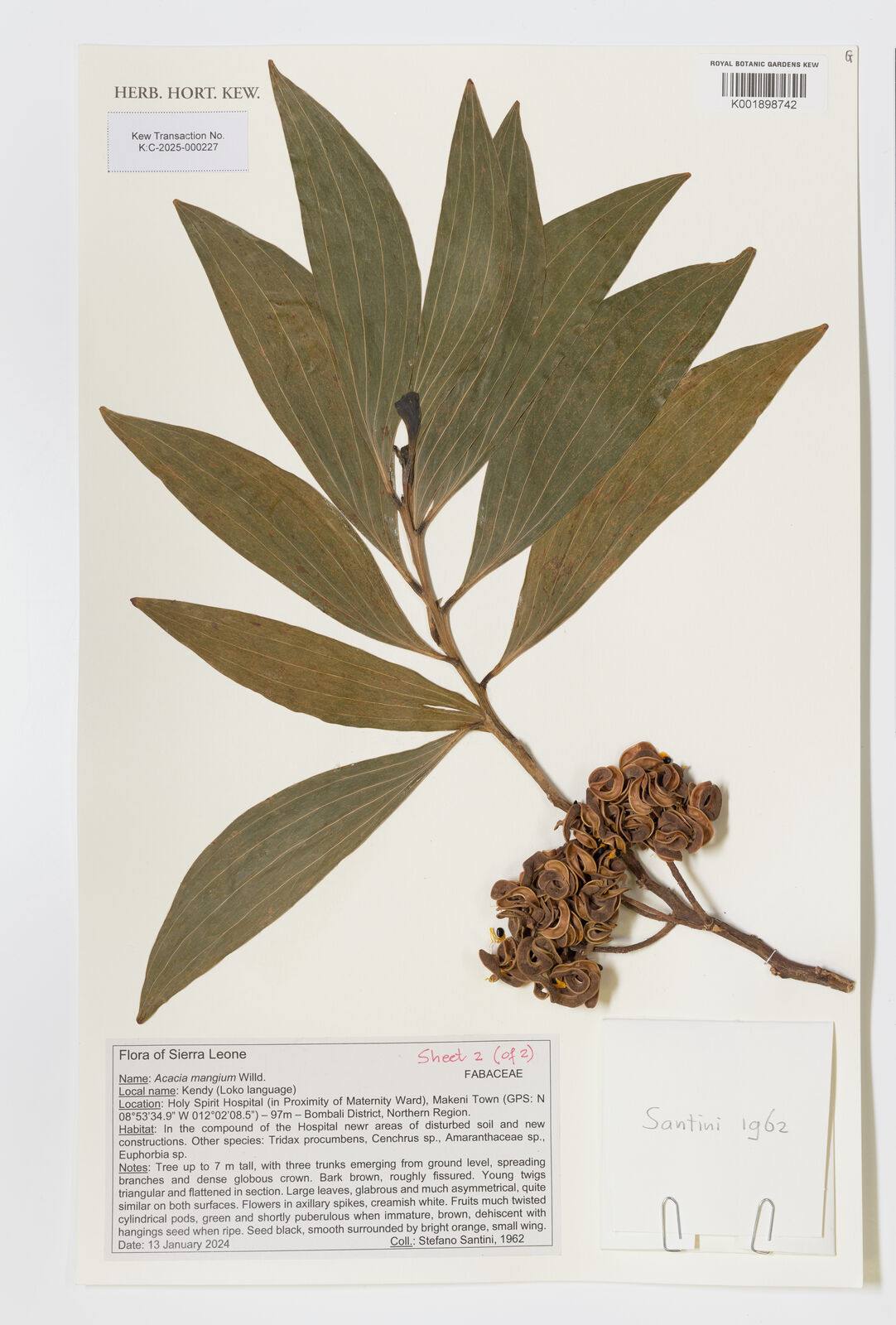
Acacia mangiumAkasia
Up to 30 metres. It grows fast and fixes nitrogen from the air, so it copes well with bare, nitrogen-poor soil.
9,500young plants in the nursery, 2025
- Scientific name
- Acacia mangium
- Loc.
- Sahavondronina
- Leg.
- communities of Sahavondronina
- Lic.
- CC BY 4.0
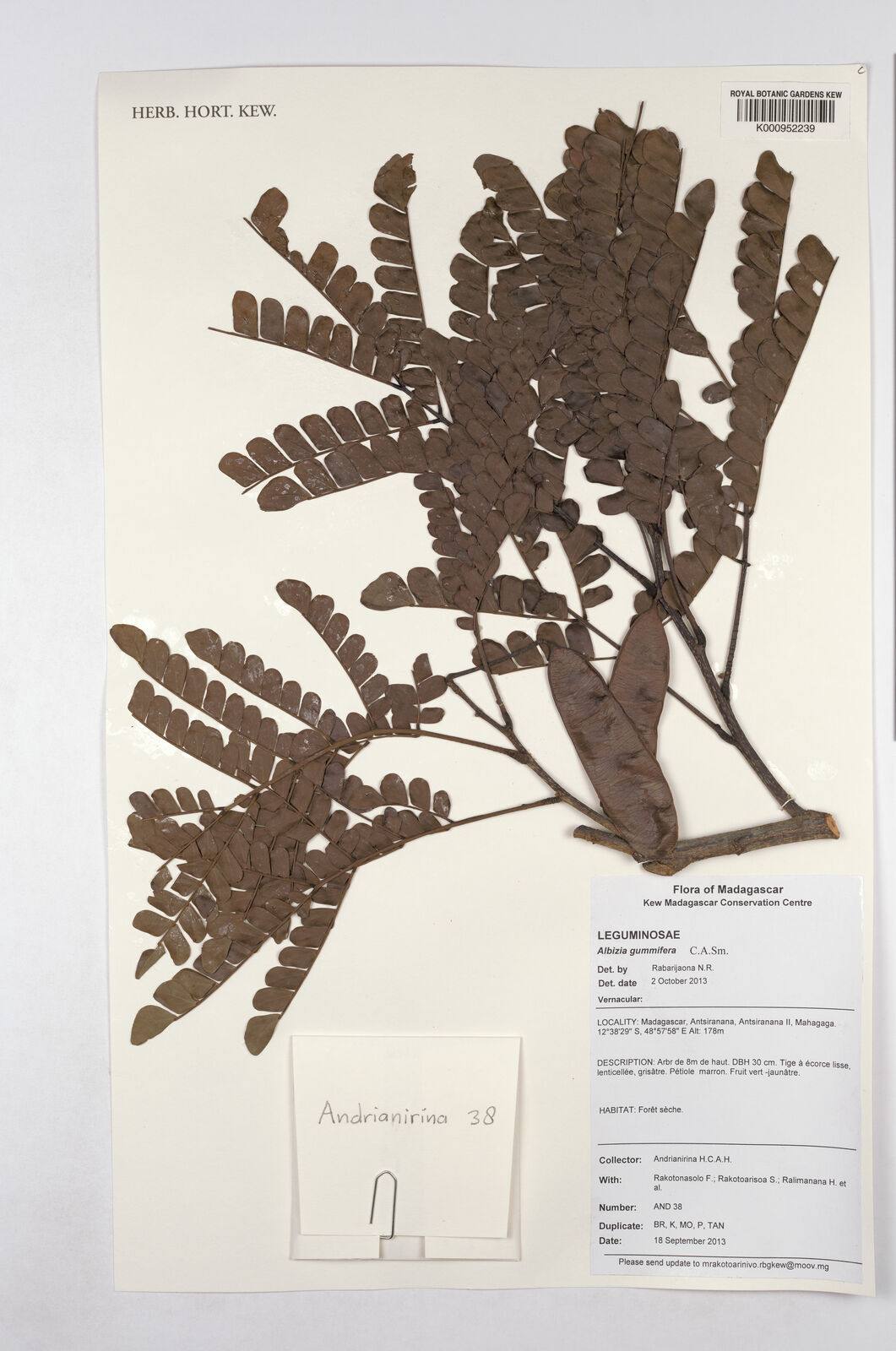
Albizia gummiferaHerse
Medium-density wood, very strong, that keeps its shape. Easy to work, but not resistant to termites or water.
Use General-purpose wood: beehives, troughs and boats.
60young plants in the nursery, 2025
- Scientific name
- Albizia gummifera
- Loc.
- Sahavondronina
- Leg.
- communities of Sahavondronina
- Lic.
- CC BY 4.0
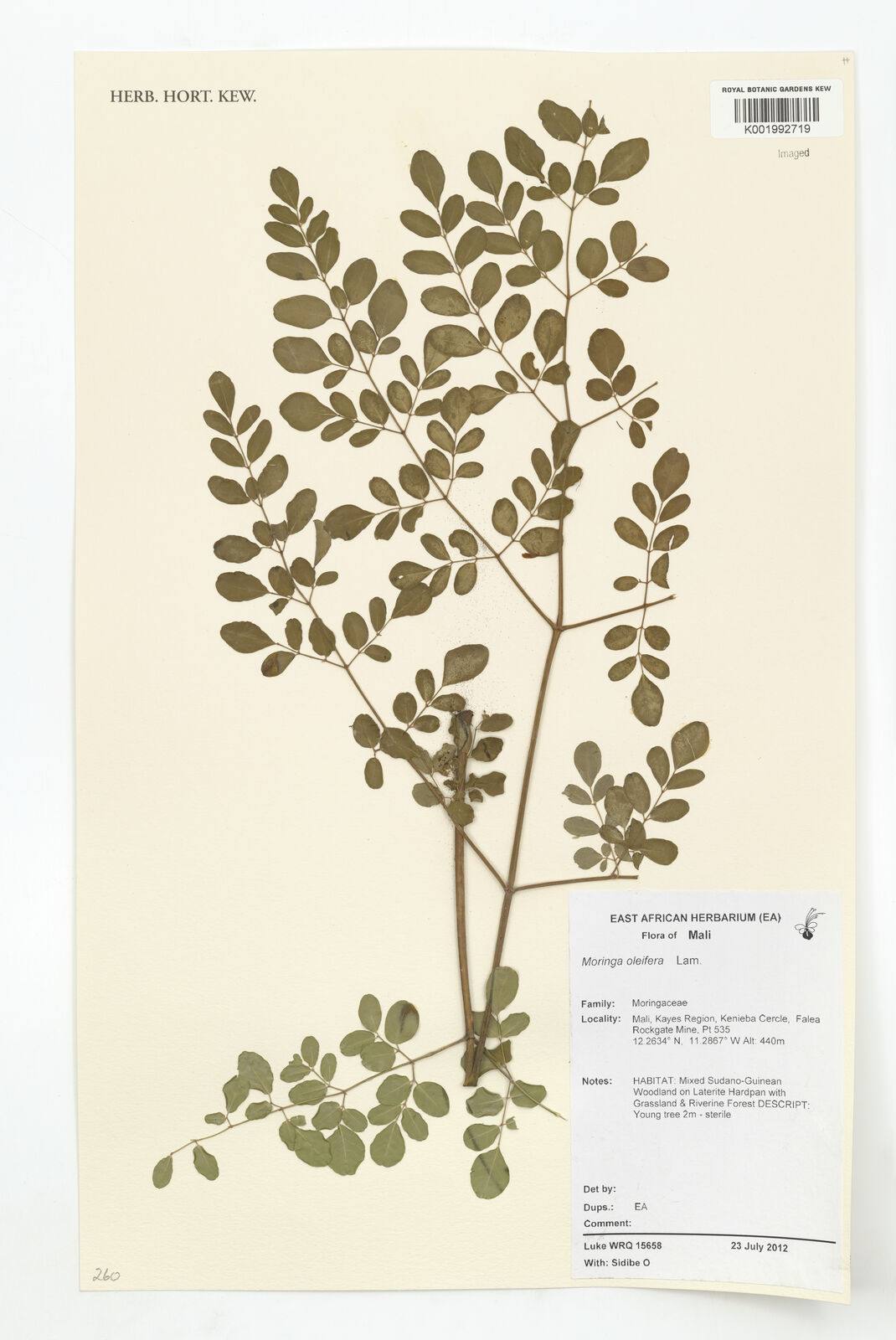
Moringa oleifera
A fast-growing tree that can reach 10 to 12 metres.
- Scientific name
- Moringa oleifera
- Fam.
- Moringaceae
- Loc.
- Sahavondronina
- Leg.
- communities of Sahavondronina
- Lic.
- CC BY 4.0
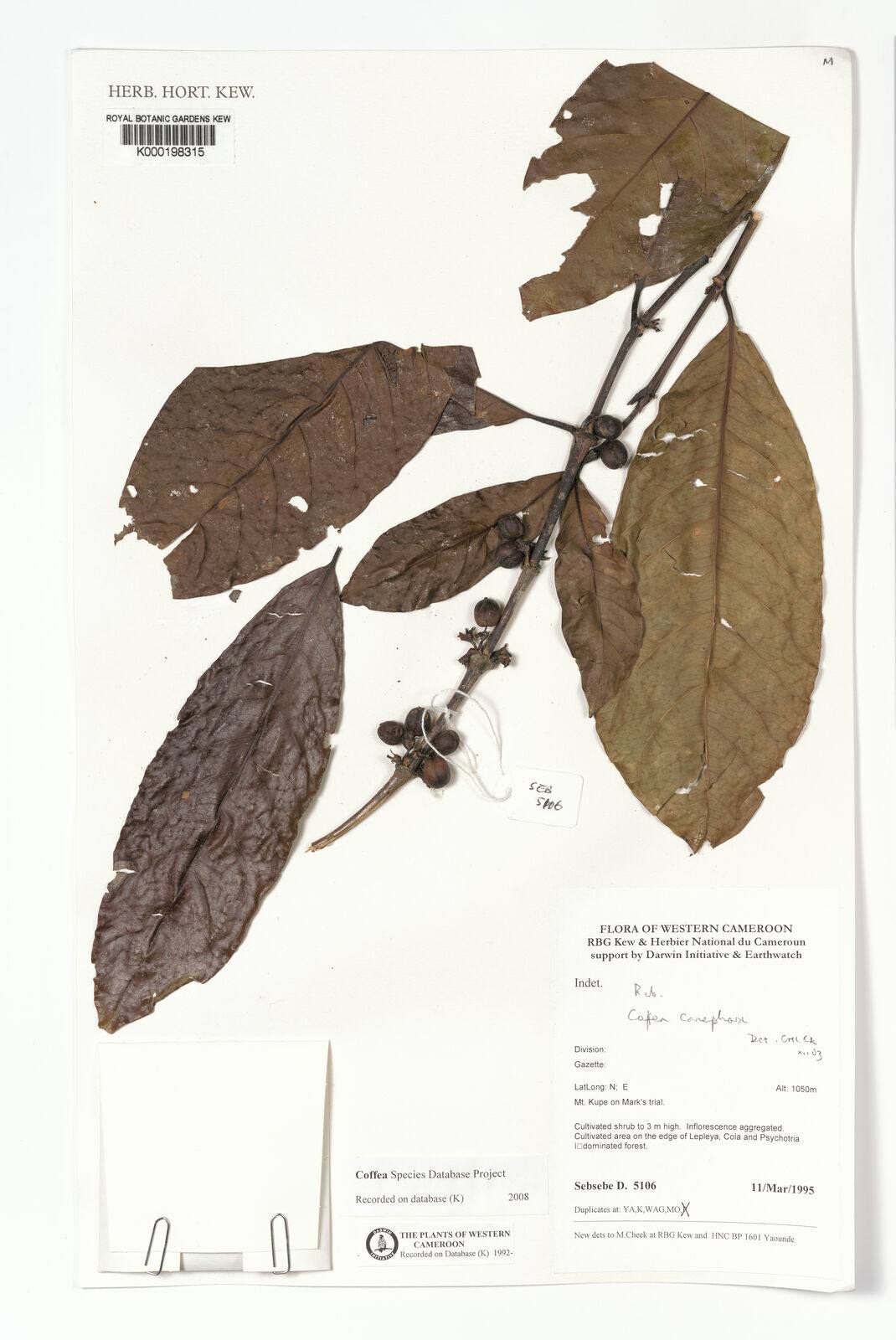
Coffea robustaKafe
A plant less vulnerable to pests, disease and sudden changes in temperature.
432young plants in the nursery, 2025
- Scientific name
- Coffea robusta
- Fam.
- Rubiaceae
- Loc.
- Sahavondronina
- Leg.
- communities of Sahavondronina
- Lic.
- CC BY 4.0
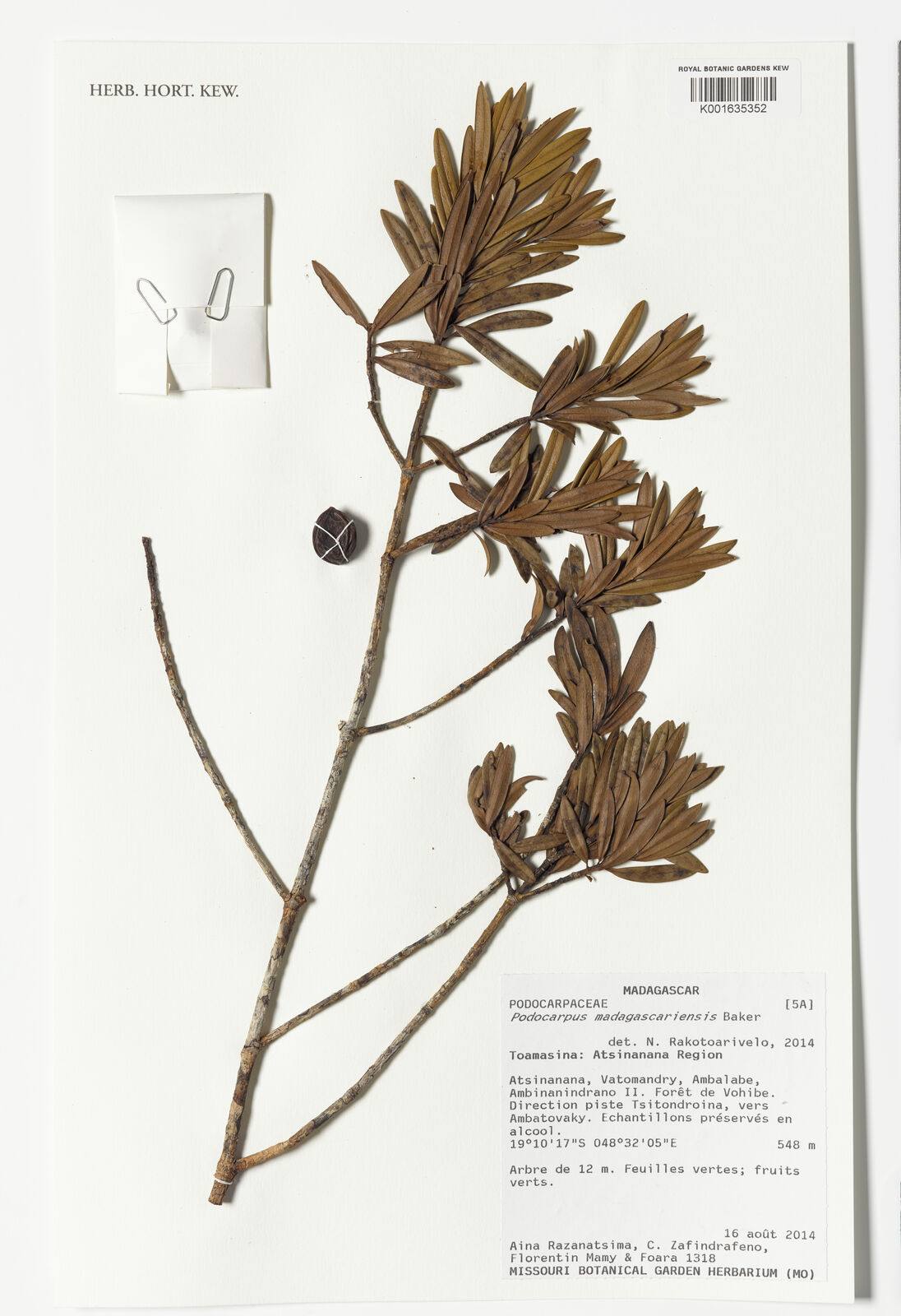
Podocarpus madagascariensis
An evergreen tree, usually 4 to 13 metres tall.
Use Its timber is widely used locally.
- Scientific name
- Podocarpus madagascariensis
- Loc.
- Sahavondronina
- Leg.
- communities of Sahavondronina
- Lic.
- CC BY 4.0
Species in the 2025 nurseries
Twenty-four species raised in the nurseries, with their Malagasy names and the number of young plants at the end of 2025.
| Vernacular name | Scientific name | Status | Number |
|---|---|---|---|
| Manamisoa nursery | |||
| Kininina | Eucalyptus robusta | Exotic | 10,000 |
| Akasia | Acacia mangium | Exotic | 9,500 |
| Tsetoy | Dodonaea madagascariensis | Native | 500 |
| Tapia | Uapaca bojeri | Native | 250 |
| Hintsy / Tsararavina | Intsia bijuga | Native | 250 |
| Anakaraka | Cordyla madagascariensis | Native | 250 |
| Mentaly | Terminalia mentaly | Native | 0 |
| Harongana | Harungana madagascariensis | Native | 0 |
| Subtotal · Manamisoa | 20,750 | ||
| Androy nursery | |||
| Manga | Mangifera indica | Exotic | 250 |
| Paiso | Prunus persica | Exotic | 300 |
| Zamborizany | Eugenia jambos | Native | 2,243 |
| Fandramanana | Aphloia theiformis | Native | 6,689 |
| Tavolo | Cryptocarya sp. | Native | 2,677 |
| Tsingotroka | Dichaetanthera oblongifolia | Native | 1,377 |
| Herse | Albizia gummifera | Native | 60 |
| Hazomena | Diospyros gracilipes | Native | 455 |
| Rotra | Syzygium sp. | Native | 2,309 |
| Voananananamboa | Chassalia ternifolia | Native | 1,720 |
| Bamboo | not given | Native | 2,500 |
| Lambinana | Nuxia capitata | Native | 558 |
| Frêne (ash) | Fraxinus uhdei | Native | 65 |
| Kafe | Coffea robusta | Native | 432 |
| Hasina | Dracaena reflexa | Native | 560 |
| Miholy | Dalbergia baronii | Native | 276 |
| Subtotal · Androy | 22,471 | ||
| Total | 43,221 | ||
Status (native or exotic) as given in the report.
Manamisoa — Mentaly and Harongana, sown in December 2025, have no transplanted plants yet.
Androy — Sixteen species, mostly native.
Source: Report Jul–Dec 2025